
 En
En  Укр
Укр 


This website was created with support of ITC 'Eastern Partnership: Ready to Trade - an EU4Business initiative' project funded by the EU as part of EU4Business Initiative. Read more: https://eu4business.eu
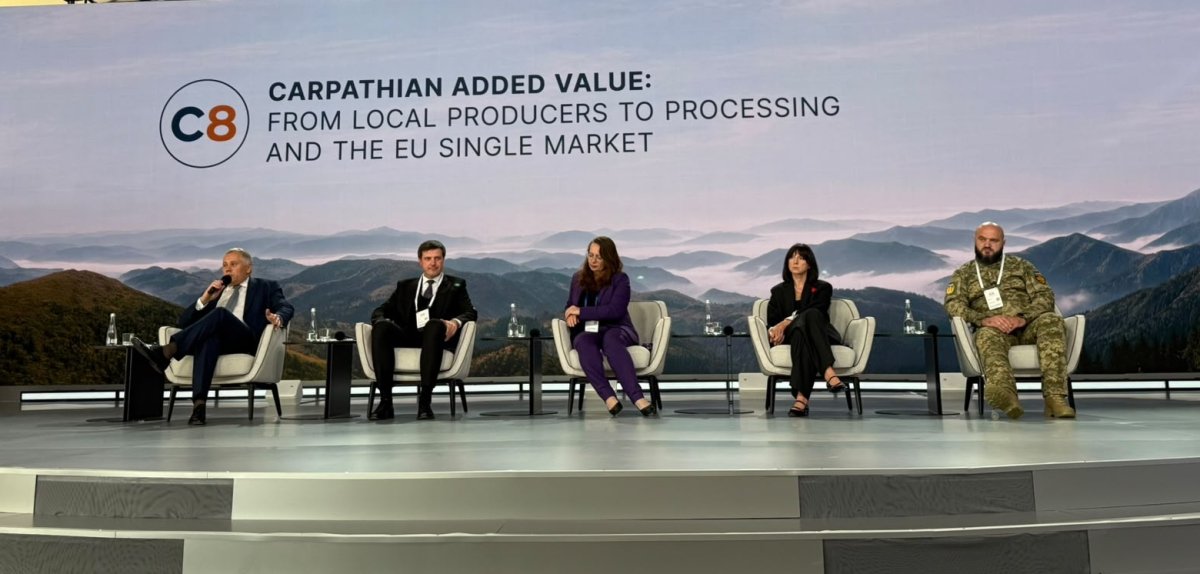
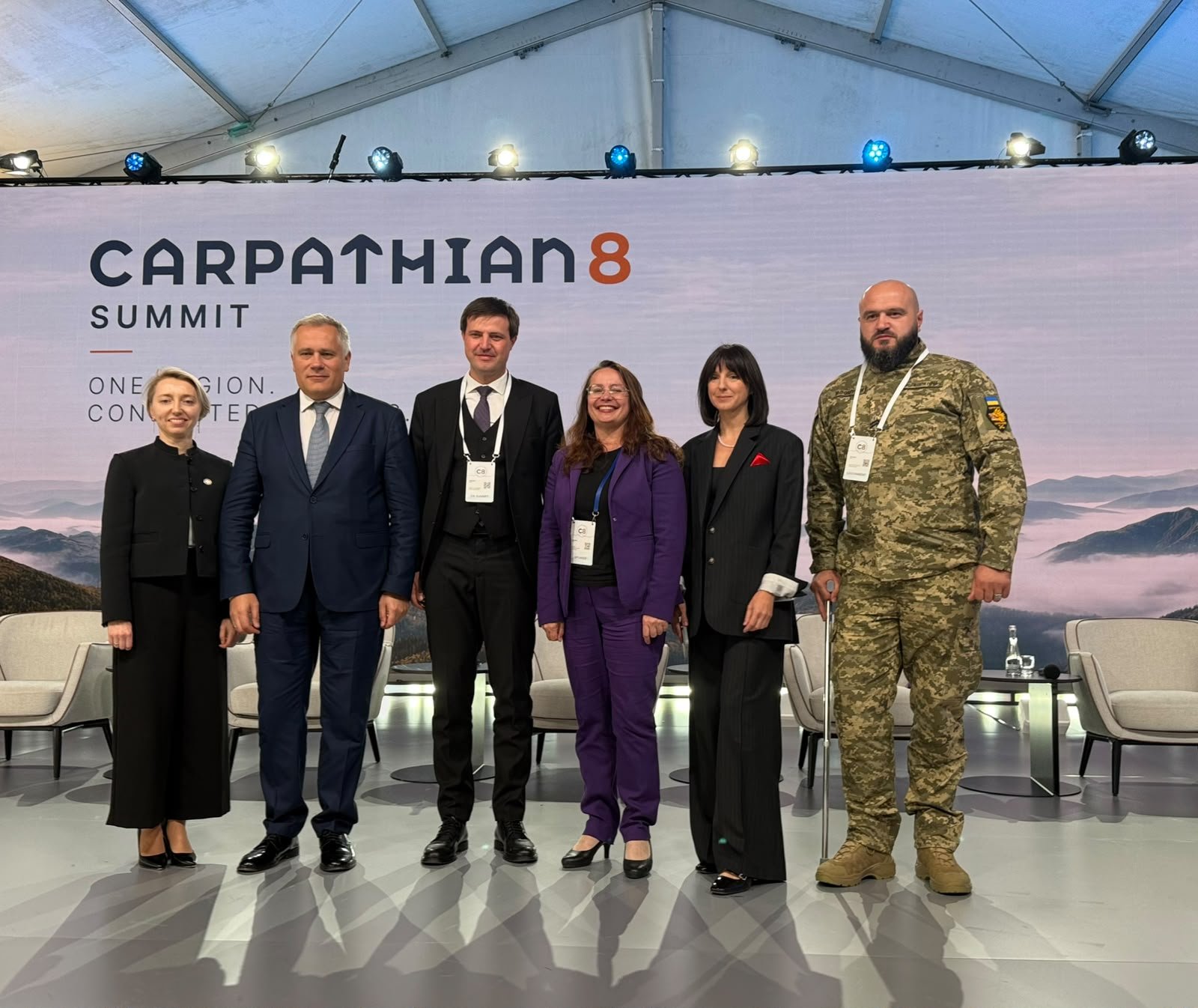
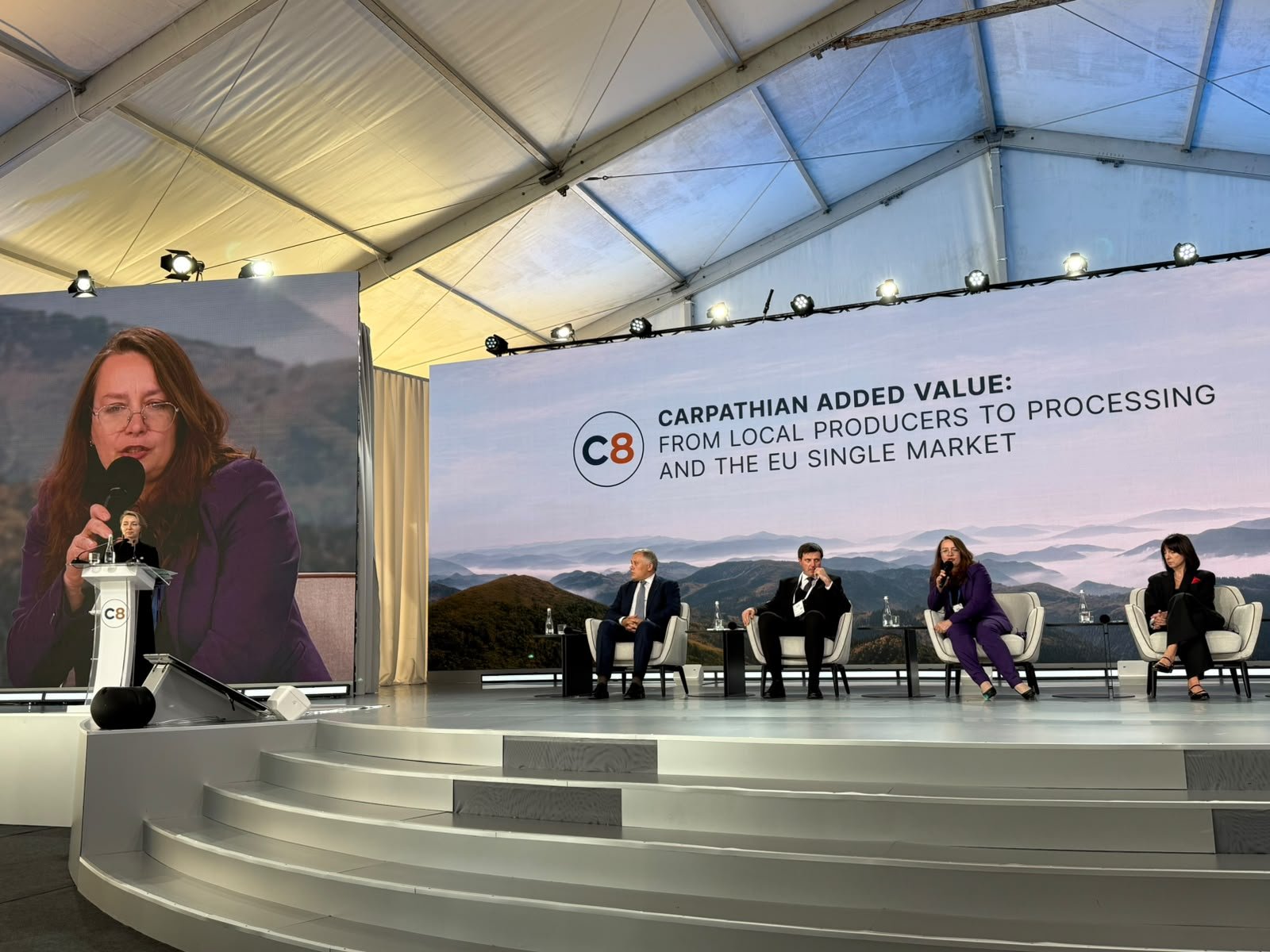
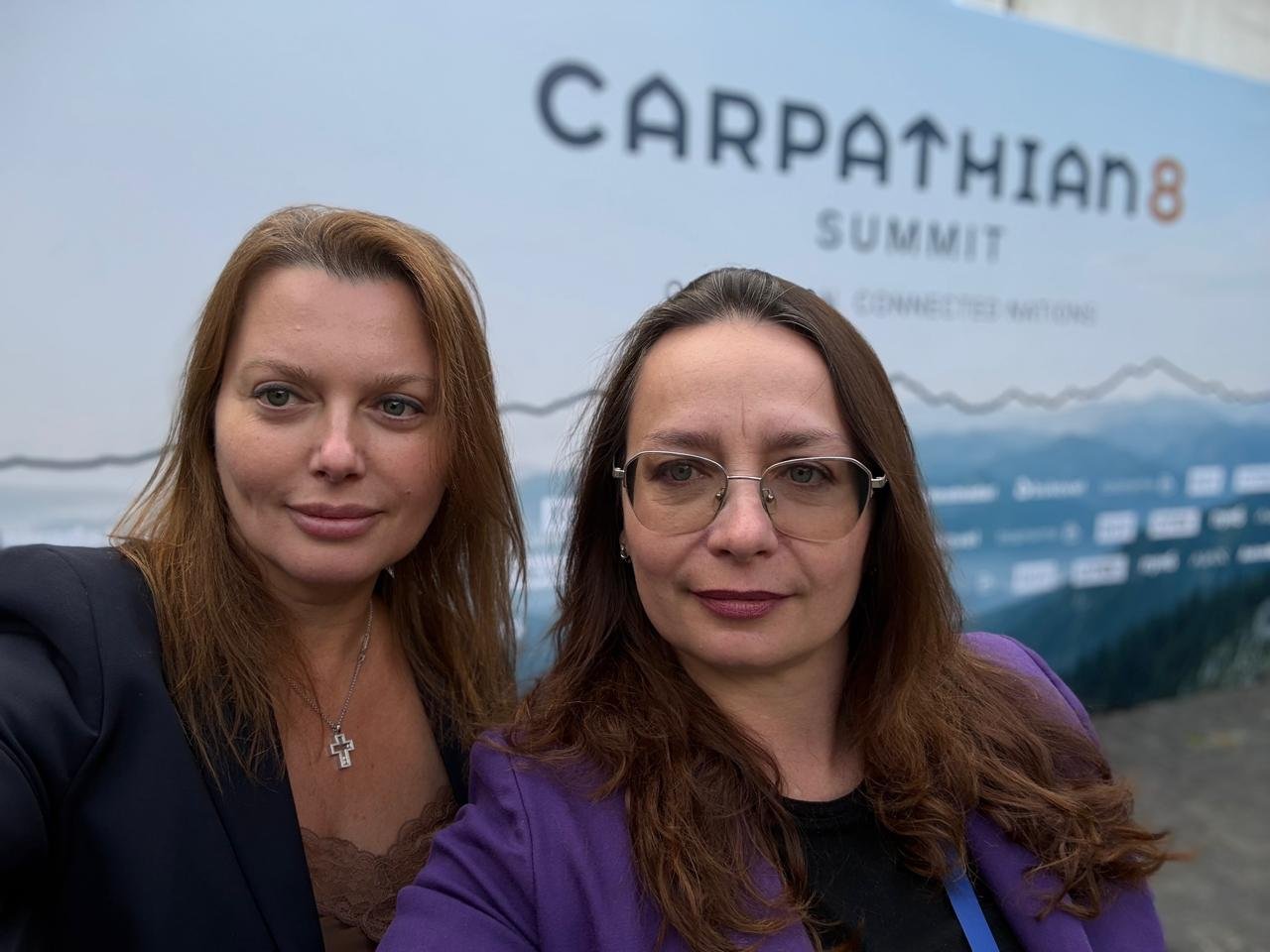
Iryna Kukhtina, President of the Ukrainian Berries Association (UBA), took part in the panel discussion “Carpathian Added Value: From Local Producers to Processing and the EU Single Market”, held on September 19 as part of the Carpathian 8 Summit in Bukovel.
The discussion brought together Ihor Zhovkva, Deputy Head of the Office of the President of Ukraine; Taras Vysotskyi, Minister of Agrarian Policy and Food of Ukraine; Nataliia Riabova, Head of Procurement at Danone Ukraine; a Ukrainian farmer and war veteran; and Pavlo Ladetskyi, National Technical Advisor and GQSP National Coordinator at UNIDO, who joined online. The panel was moderated by Hanna Antoniuk, Head of the FAO Office in Lviv.
The discussion focused on creating added value in the Carpathian region, developing competitive agricultural value chains, and integrating Ukrainian producers into the EU Single Market..
Speaking about the prospects of the berry sector, Iryna Kukhtina emphasized that simply growing, cooling, freezing, processing or packaging a product in Ukraine does not automatically mean that high added value has been created.
The key indicator is how much profit ultimately remains with Ukrainian participants in the value chain — farmers, processors, logistics and service companies, and other businesses.
Therefore, the goal should not be to increase the number of operations within the chain at any cost, but to make its participants stronger and more competitive, enabling them to capture a larger share of the value of the final product.
One of the characteristics of the Carpathian berry sector is the large number of small farms. This creates not only the challenge of assembling sufficient commercial volumes, but also a much more complex task: ensuring consistent production practices, proper control over the use of plant protection products, traceability and stable product quality across a large number of producers.
That is why aggregation should be more than a mechanism for consolidating volumes. It should become a tool for managing quality and production.
This requires training and agronomic support, quality control systems, group certification, traceability, a cold chain and professional market access.
At the same time, relying solely on traditional cooperatives is unlikely to solve the problem. Legal consolidation of producers is not enough — what is needed is a professional value-chain operator and the expertise required to effectively manage quality, production technologies and sales.
The discussion also highlighted the shared responsibility of value-chain participants.
Large buyers have a vested interest in developing their suppliers and processors, while processors and aggregators are interested in developing the farmers they work with.
Stable quality cannot be achieved simply by inspecting the finished product: quality is created at the production stage.
This is particularly important for a sector with a large number of small farms. Quality, safety and production requirements must be communicated throughout the entire value chain, together with the knowledge and tools producers need to meet them.
According to Iryna Kukhtina, investment in the development of the Carpathian agricultural sector should not be limited to cold storage, processing facilities or logistics. It is equally important to invest in the sector’s “soft infrastructure” — knowledge, advisory services, quality control, aggregation, certification and market linkages.
The sustainability of advisory services remains a particular challenge. Today, a significant share of advisory activity depends on donor-funded projects: when project funding is available, the supply of services grows; when a project ends, the system weakens.
Therefore, it is important to stimulate a competitive environment for professional advisory services and develop a market in which advisory providers build expertise, compete for clients and operate independently of individual project-funding cycles.
The Carpathian region has several different development opportunities, and there can be no single solution for all of them.
Zakarpattia has an advantage in early-season berries and potential for developing fresh produce supplies to the European market. At the same time, the fresh market requires a much higher level of production management: control over plant protection product use and pesticide residues, traceability, consistent quality, certification, cooling and logistics.
One promising model could be contract farming, including the cultivation of club varieties, where the buyer, variety, production technology and product requirements are defined before planting.
For wild-collected products, the logic is different. Their commercial use should develop alongside the preservation of natural resources, sustainable harvesting and traceability. Increasing volumes should not come at the expense of exhausting natural resources.
Another opportunity for Ukraine lies in the rapid development of technological capabilities.
Solutions that are currently developing rapidly in miltech — drones, autonomous ground systems, monitoring and automation — have the potential to be adapted for agriculture, including berry production, field operations and protected cultivation.
This gives Ukraine an opportunity, in certain areas, not only to catch up with other countries but also to develop its own technological solutions and become one of the leaders in their application in agriculture.
During the panel discussion, the Ministry of Agrarian Policy and Food of Ukraine expressed its readiness to consider issues related to the tax burden on agricultural producers, including VAT-related matters.
At the end of the panel, participants were asked to name one change that, in three years, could demonstrate successful development of competitive agricultural value chains.
“I want to see Ukraine not as a supplier of low-cost raw materials, but as a supplier of consistently high-quality products — competitive goods that meet the requirements of the European market,” Iryna Kukhtina concluded.

___
When using, quoting, or sharing information published by the Ukrainian Berries Association, an active link to the original source is required

Mytropolyta A. Sheptytskoho Str. 4, BC KOMOD, of. 49, Kyiv, 02002, Ukraine