
 En
En  Укр
Укр 

This website was created with support of ITC 'Eastern Partnership: Ready to Trade - an EU4Business initiative' project funded by the EU as part of EU4Business Initiative. Read more: https://eu4business.eu



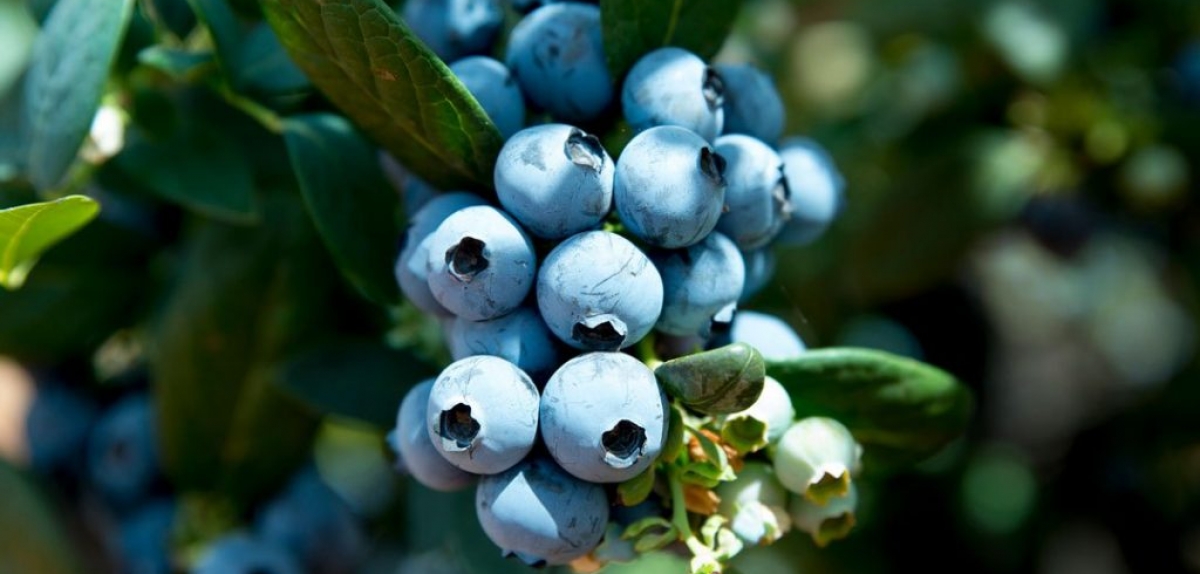
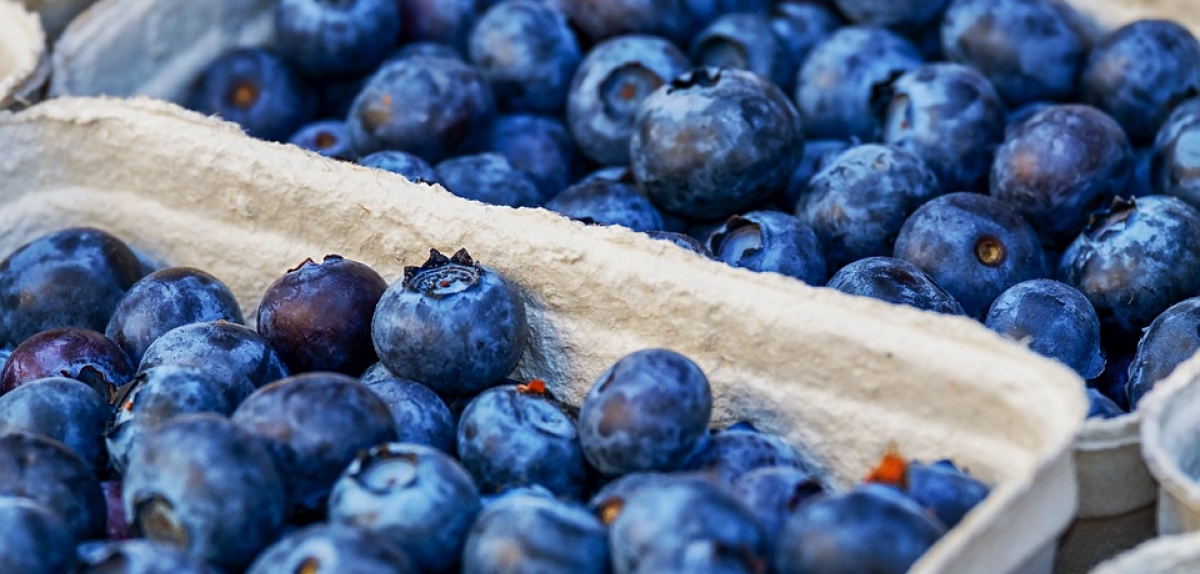
What is Ukraine’s position in the global blueberry market, and where is the industry heading? The new IBO Global Blueberry Report 2026 provides an opportunity to examine Ukrainian production in both a global and regional context.
Today, Ukraine ranks among the world’s top 10 countries by blueberry growing area, although it still significantly lags behind its competitors in terms of yields. At the same time, export destinations are changing, quality requirements are increasing, and competition in the European market is becoming more intense.
Below are the key findings of the report specifically relevant to Ukrainian blueberry growers and exporters.
Experts from the Ukrainian Berries Association analysed the IBO Global Blueberry Report 2026 and identified the following key trends.
Ukraine has approximately 6,000 hectares planted with blueberries, of which around 5,000 hectares are productive. Total production in 2025 amounted to 14,330 tonnes.
Ukrainian blueberry plantations produced an average of only 2.87 tonnes per hectare, compared with 7.13 t/ha in Poland and a global average of 9.05 t/ha. This means that the potential of existing plantations is still far from being fully utilised.
The main reasons are related primarily to production practices: many plantations are still young and have not yet reached full production; there are numerous small farms with less advanced agronomic practices; and northern highbush varieties, which generally take longer to reach their full productive potential, dominate the varietal structure.
Frost events in 2024–2025 also reduced production, but they are not the main reason for the low yields.
According to IBO, the industry should focus not simply on expanding the planted area, but primarily on improving yields, production technologies, varietal selection and plantation protection.
Weather-related risks remain a serious factor, but they are not the only reason for low productivity.
Cold weather in 2025 particularly affected mid-season varieties, while exports of fresh blueberries declined by 25% compared with the 2024 peak. At the same time, Poland demonstrates that even after frost events, significantly higher yields can still be achieved.
Poland's share of Ukrainian blueberry purchases declined from 27% in 2023 to 15% in 2025. Meanwhile, the Netherlands became the leading buyer.
Among the reasons for moving away from the Polish market are border delays, lower margins and growing domestic demand in Poland.
For Ukraine, direct access to more solvent and higher-value buyers is becoming increasingly important.
The most promising destinations include the Netherlands, Scandinavia and the United Kingdom. The objective is not simply to increase export volumes, but rather to sell higher-quality berries to markets offering better prices and to work with buyers more directly, reducing unnecessary intermediaries.
According to the trade data presented in the report, fresh Ukrainian blueberries were valued at approximately €4.8/kg, while the category of “other frozen berries” was valued at around €1.4/kg.
Therefore, the strategic focus should be on fresh blueberries and improving their quality.
Ukraine has the largest blueberry growing area in the region, but it lags behind Romania in production. In terms of exports, Ukraine was overtaken by Georgia in 2025.
Georgia increased its blueberry exports by 39%, while Ukrainian exports declined by 25%.
The global market is increasingly willing to pay for large, sweet berries with good shelf life.
For Ukrainian growing conditions, new high-chill varieties may be particularly promising, especially in the Polissia region.
The importance of drip irrigation, frost protection during flowering, modern machinery, sorting lines and mechanisation is growing.
This is particularly important for Ukraine against the backdrop of rising labour costs and labour shortages.
Among the priorities are compliance with European requirements for packaging and certification, as well as stricter control of pesticide residues.
Ukraine ranks third globally in wild bilberry harvesting, accounting for 10.8% of global volumes, after Canada (63%) and the United States (21%).
However, wild bilberry harvesting in Ukraine fell sharply in 2025 — from 29,000 tonnes to 13,500 tonnes.
The shortage of wild berries on the global market is increasing interest in cultivated blueberries as a substitute product in the frozen berry segment.
___
У разі використання, цитування або поширення інформації, опублікованої Асоціацією «Ягідництво України», обов'язковим є активне посилання на першоджерело.

Mytropolyta A. Sheptytskoho Str. 4, BC KOMOD, of. 49, Kyiv, 02002, Ukraine