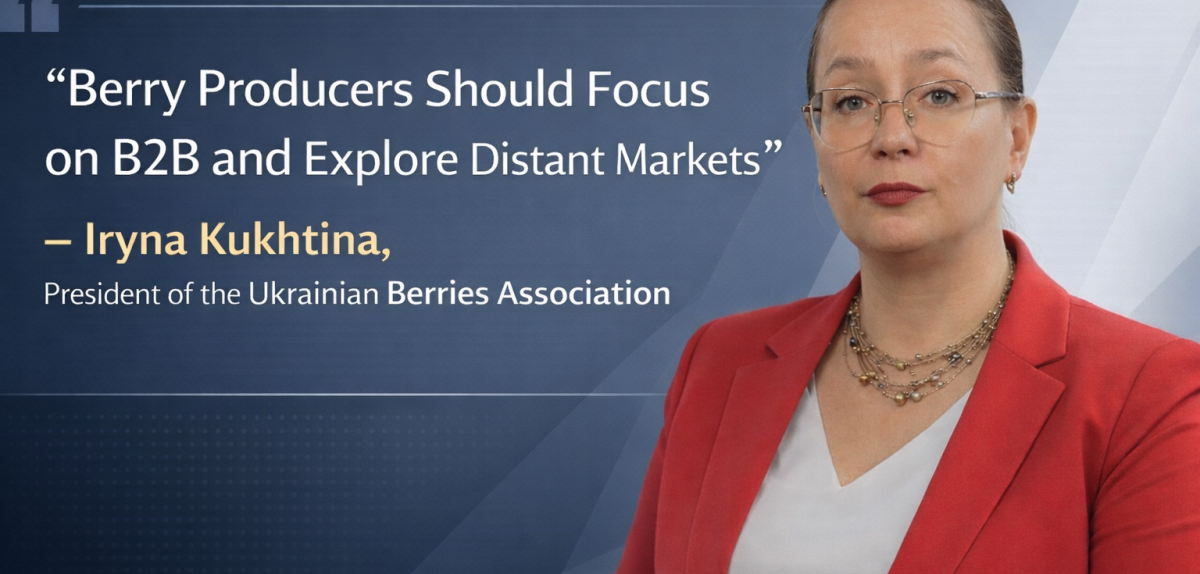
Iryna Kukhtina, President of the Ukrainian Berries Association, spoke about global trends in the frozen berry market and the strategic challenges facing Ukraine during the roundtable “Development of Berry Growing in Ukraine: Challenges and Prospects of European Integration,” initiated by the Committee on Agrarian and Land Policy of the Verkhovna Rada of Ukraine.
The expert analyzed global demand structures, competition patterns, and the key constraints faced by Ukrainian exporters.
Ukraine in Global Trade: A Share That Is Still Fragile
According to Kukhtina, Ukraine’s position in the frozen fruit and berry segment is uneven:
• In Poland, which acts as a European re-export and processing hub, Ukrainian products account for around 24% of imports.
• In Germany – approximately 9%.
• In overall EU frozen fruit imports – about 9.5%.
Poland itself holds 15.8% of global imports in this category, partly due to Ukrainian raw materials passing through Polish channels.
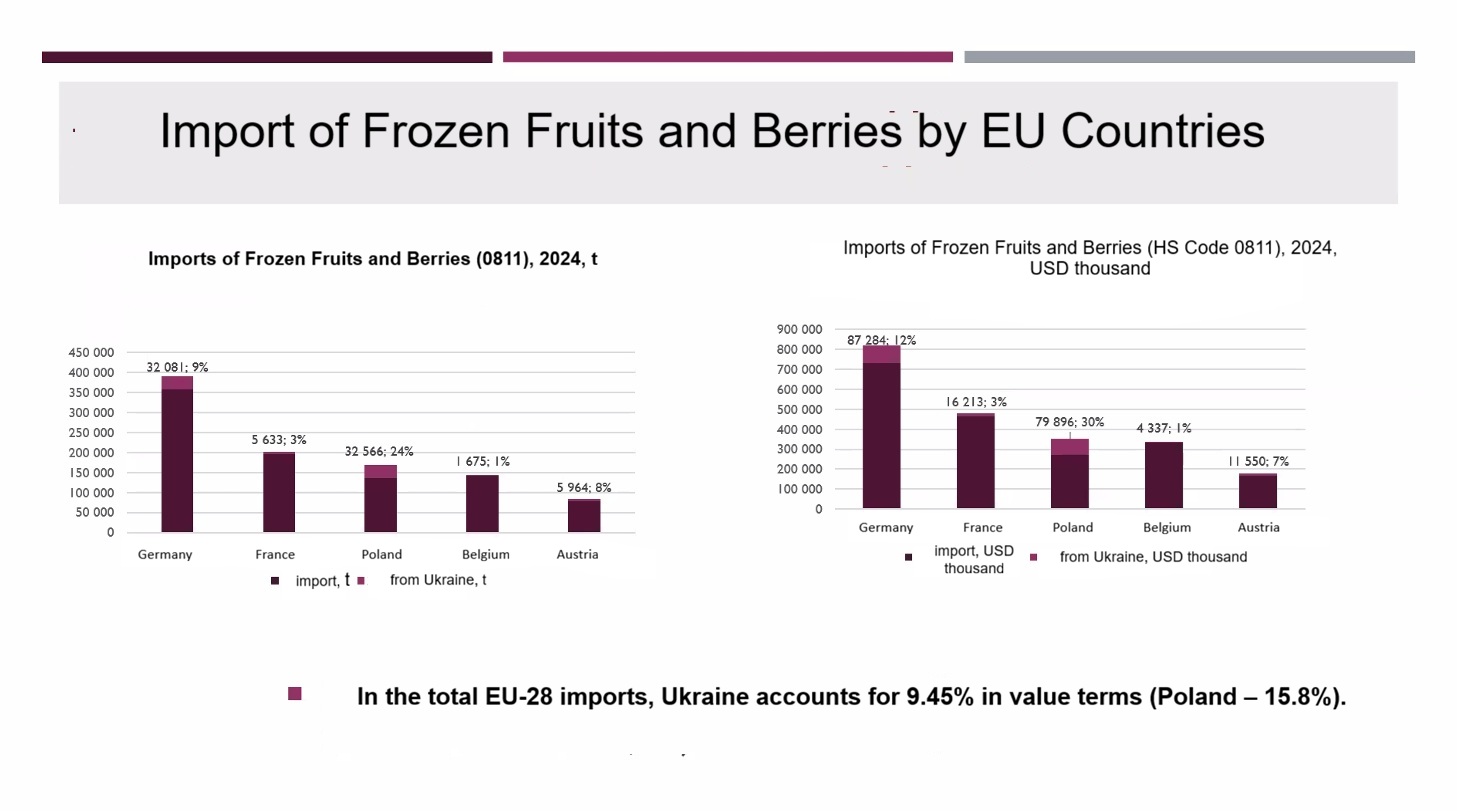
Over the past three years, Ukraine has gradually diversified its exports and reduced dependence on the Polish market by shifting toward direct deliveries to France, Germany, and other countries. However, this diversification remains limited to a few key crops — primarily raspberries and blueberries.
Retail Is Not the Main Market
One of the key messages of Kukhtina’s speech was the need to properly understand global demand structure. Globally:
• 65% of frozen berries and fruits go into deep processing (food industry ingredients),
• 25% go to HoReCa,
• Only 10% go to retail.
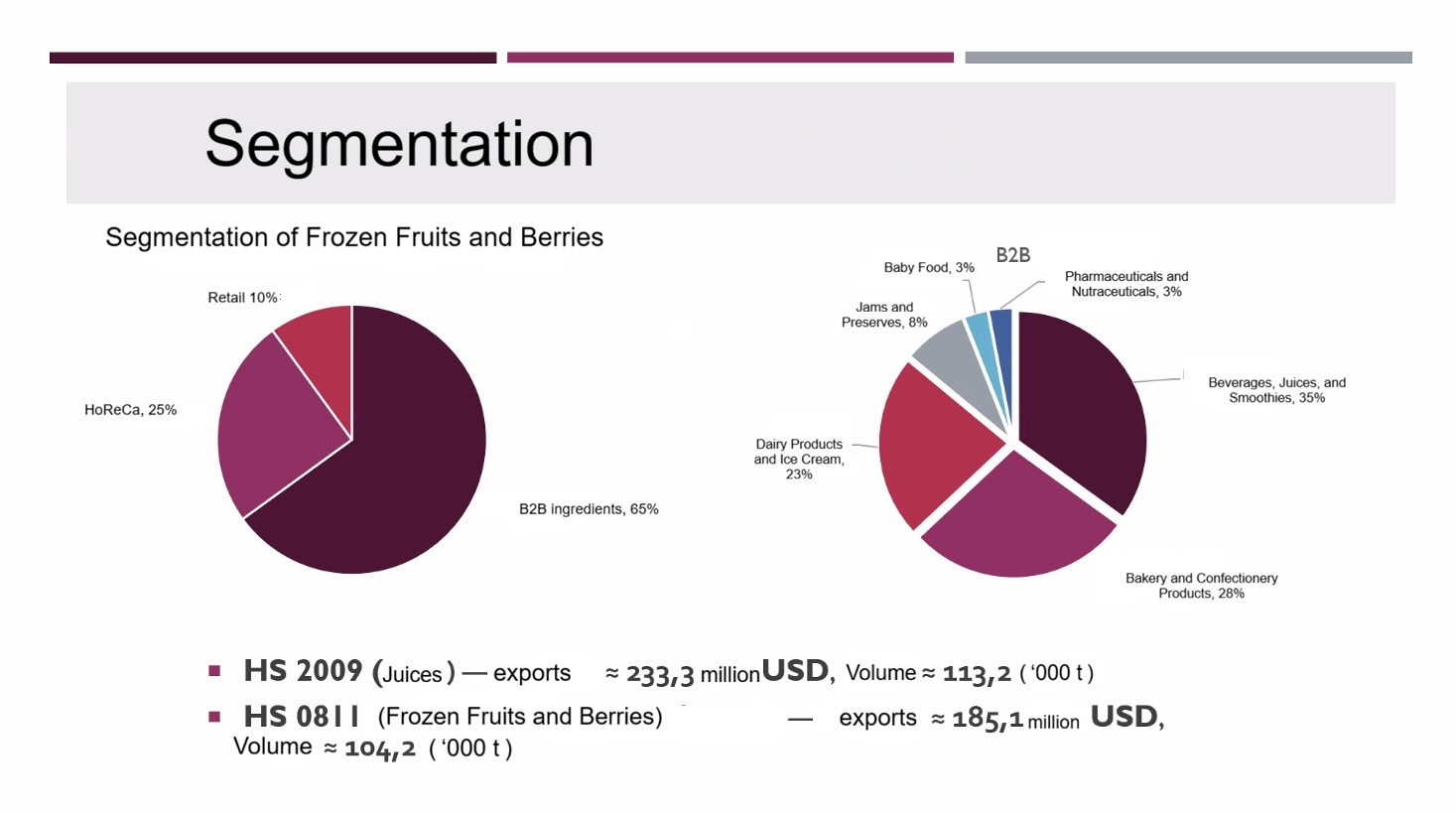
In Germany, for example, the HoReCa share exceeds 40%, reflecting the country’s developed restaurant sector. This means retail potential is structurally limited.
“That is why it is crucial to focus on deep processing and the B2B segment – ingredients for the food industry,” Kukhtina emphasized.
Within B2B, frozen berries are used in:
• beverages, juices, and smoothies,
• bakery and confectionery products,
• dairy products and ice cream,
• baby food,
• fruit fillings.
Product requirements vary significantly by segment. Beverage production has the least strict specifications. Dairy production requires high physical purity. Baby food demands the strictest biological and chemical safety standards.
This translates into different margins and technological requirements — and this is precisely where added value can grow.
Interestingly, Ukraine exports approximately 104,000 tons of frozen berries and nearly the same volume of juices. Theoretically, this creates room to expand exports of juices and concentrates as higher-value processed products.
Narrow Product Range
Ukraine’s export structure critically depends on two crops — raspberries and blueberries — creating several risks:
1. Climate risk – poor harvests immediately affect export performance.
2. Market risk – excessive market share shifts from Serbia may prompt the EU to diversify suppliers.
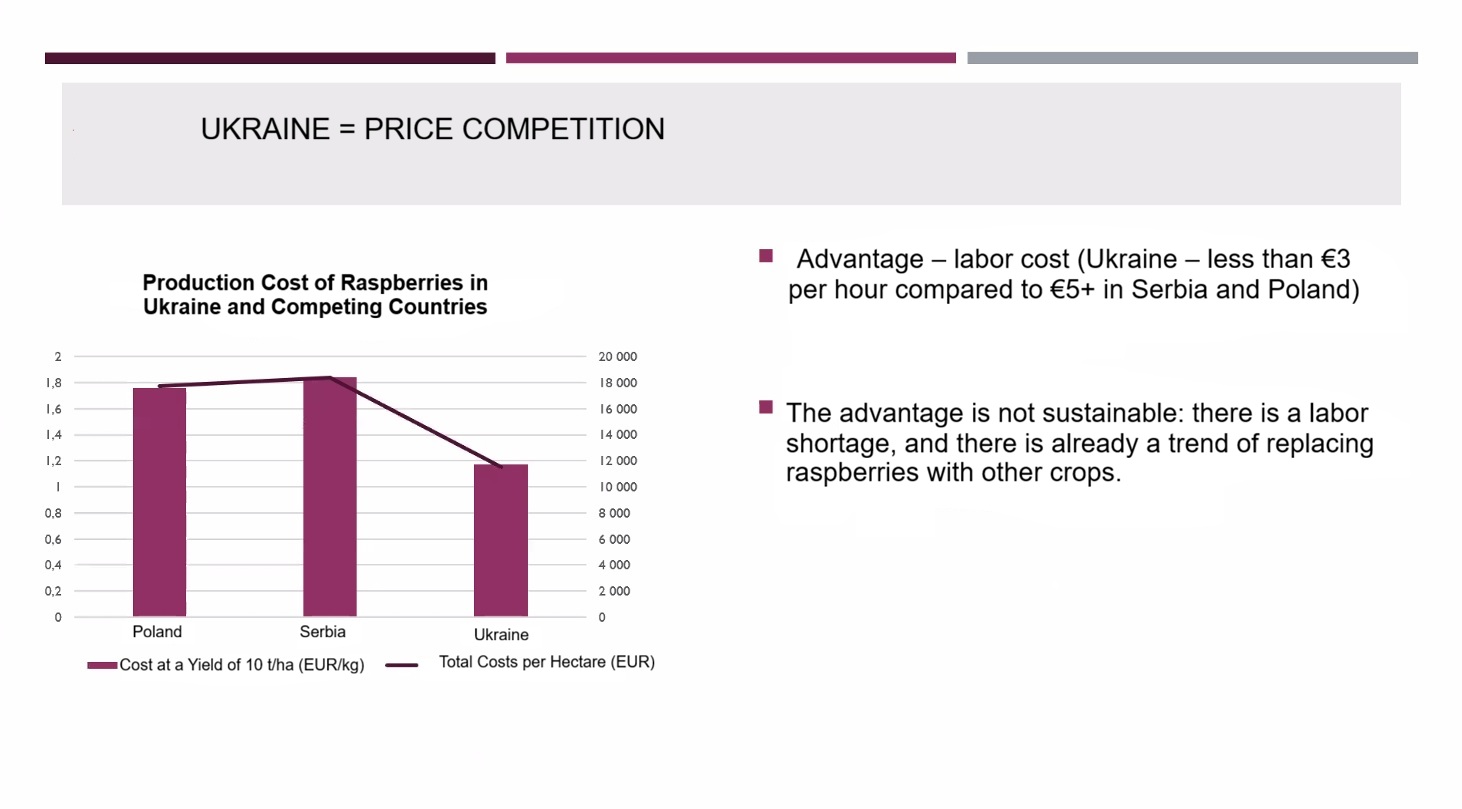
3. Price competition – competition is currently almost entirely price-based.
In recent years, Ukraine has significantly taken market share from Serbia and partly from Poland. However, this does not guarantee long-term stability.
Labor Shortage: A Key Structural Constraint
Ukraine’s competitive advantage was largely based on cheaper labor. However, amid demographic challenges and wartime conditions, labor resources are becoming scarce.
Iryna Kukhtina believes mechanized harvesting is the only way to maintain competitiveness under labor shortages. However, this requires:
• farm consolidation,
• changes in production models,
• transition from small household-based production to larger-scale operations.
“We often hear about creating new jobs, but the problem is that we cannot even fill the existing ones.”
Farmers are already partially replacing raspberries (due to labor-intensive hand harvesting) with crops such as sea buckthorn and rosehip, which allow mechanized harvesting.
“Currently, we are competing on price, and we need to move away from that. We must expand the range of crops,” Kukhtina stressed.
Limited Growth Potential of Raspberries
Kukhtina also highlighted structural limitations: EU frozen raspberry imports have remained stable at around 3 million tons in recent years. The market is not expanding rapidly.
Ukraine’s export growth largely resulted from redistribution of market share rather than expansion of total demand. Therefore, further development requires diversification of raspberry-based products — new processing formats and ready-made solutions.
R&D Is More Important Than Equipment
A separate emphasis was placed on technological capacity.
“Ukraine practically has no proprietary technologies. In ready-made product markets, R&D wins — not equipment.”
In ice cream, fruit fillings, and finished products, key competitive factors include:
• formulations,
• taste profiles,
• technological adaptability,
• quality consistency.
Ukraine lacks a strong domestic food technology base. Government programs supporting food technologist training and international education with return commitments could significantly improve the situation.
Distant Markets: Asia and Australia
European markets remain highly competitive. Therefore, geographical diversification could become a strategic priority.
“Remaining a raw material exporter makes us highly dependent on weather, which is why export revenues fluctuate significantly from year to year. European markets are highly competitive, so we must look at geographically distant countries.”
Among potential destinations:
- Indonesia,
- Malaysia,
- Australia.
Australia serves as an illustrative example: the country focuses on fresh domestic production while importing frozen products for industrial use — primarily from Chile and China.
“Entering Australia is possible, but it requires state support in promotion and logistics solutions,” Kukhtina noted.
Marketing and Government Support
The industry lacks not only investment in equipment but also systematic international marketing support. Current efforts by the association — catalogs, exhibitions, B2B events — remain limited due to financial constraints.
B2C marketing in the finished products segment is extremely expensive, and only a few Ukrainian food brands have successfully scaled internationally.
Conclusion: Strategic Priorities for the Sector
Kukhtina’s speech outlined several systemic priorities for Ukrainian berry production:
- Transition from price-based to product-based competition.
- Focus on B2B and deep processing.
- Expansion of crop assortment.
- Mechanization and farm consolidation.
- Development of R&D and food technologist training.
- Geographic diversification of exports.
- Stronger government-backed marketing support.
The key objective is to integrate Ukrainian berry production into global value chains — not as a supplier of cheap raw materials, but as a technological partner for the global food industry.

 En
En  Укр
Укр